5 min read

How Cyber Risk Management Works Across Supply Chains, Vendors, and Critical Systems
Cyber risk management in the supply chain goes beyond vendor checklists. Learn how organizations assess, rank, and manage third-party cyber risk across connected systems to support resilience and business continuity.
Key Takeaways
- Cyber risk in the supply chain lives in connections, not just vendors
- Risk scoring only works when it drives real decisions
- Continuous risk management directly supports resilience
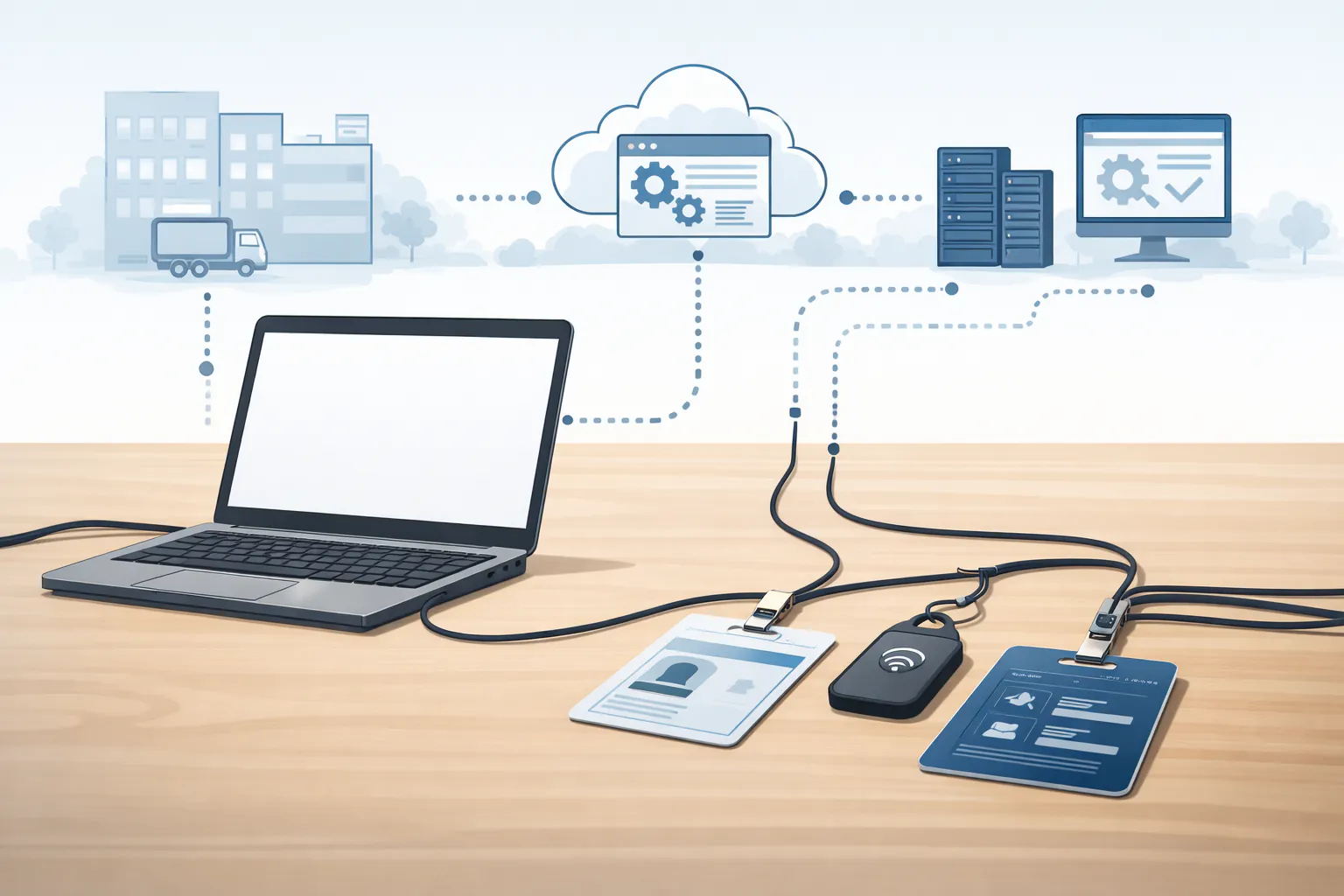
Cyber risk management is how organizations identify what could go wrong, estimate the business impact, and decide which security controls get attention first. In supply chains, that work extends beyond your own network. Your exposure also lives in vendor portals, shared data feeds, outsourced IT, SaaS tools, and service providers with privileged access.
This guide breaks down a practical way to assess cyber risk across internal and third-party systems, convert findings into decision-ready scores, and keep the program current as vendors and threats change. You will also see how risk work supports business continuity and resilience goals.
What Cyber Risk Looks Like in a Supply Chain
Supply chain cyber risk is not just “vendors might get breached.” It is the set of technical and operational failure modes that can interrupt delivery, expose regulated data, or create unsafe changes in systems that run your business.
A few common patterns:
- A vendor account is compromised, then used to log in through a trusted integration.
- A third party pushes a software update that breaks a critical workflow.
- A shared file exchange or API leaks sensitive data because access rules were too broad.
- A service provider has admin access and no strong identity controls, then becomes the entry point.
Here’s the punchline. In supply chains, the blast radius is often larger because systems are connected on purpose. Risk management has to look at connections, data paths, privileges, and recovery steps, not just checklists.
Build an Asset and Dependency Map That Matches Reality
Before you can score risk, you need a consistent map of what matters. For supply chain security, the most useful map is not “all servers.” It is “what must keep running for orders, production, shipping, billing, and customer service to function.”
Start with three lists:
1) Critical Business Services
- Order to cash
- Procure to pay
- Manufacturing execution
- Warehouse and transportation workflows
- Customer support and returns
2) Supporting Systems and Data
- ERP, WMS, TMS, SCM platforms
- Identity provider and single sign-on
- Data warehouses, reporting, EDI, APIs
- File transfer and document management
3) Third-Party Dependencies
- SaaS apps used by core teams
- Vendors with network access
- Outsourced development or DevOps partners
- Logistics and EDI providers
- Payment processors and customer data tools
Quick check. If you cannot name which vendors have access to which data and which workflows, your next risk score will be a guess. Build the map first, then keep it updated in the same place procurement and IT can both see.
Risk Assessments That Produce Decisions, Not Noise
A useful risk assessment does three jobs:
- Identifies likely threat scenarios
- Estimates impact in business terms
- Points to the smallest set of control changes that lowers risk meaningfully
Use a Simple, Consistent Risk Formula
Many teams get stuck because “risk” feels abstract. Use a consistent formula and apply it the same way across internal and vendor systems:
- Likelihood: How plausible is the scenario this quarter?
- Impact: What happens to revenue, operations, legal exposure, and safety if it occurs?
- Exposure: How connected is the system, and how much access does it have?
- Control Strength: How strong are identity, logging, segmentation, and recovery?
You do not need a perfect number. You need a repeatable method that can be explained to leadership and applied across hundreds of vendors.
Start with Tiering, Then Go Deeper Where It Counts
For supply chain programs, tier vendors first so effort matches risk:
- Tier 1: Direct access to sensitive data or production systems, or required for critical services
- Tier 2: Access to important systems, but with limited privileges or easy workarounds
- Tier 3: Low access and low business impact
Then match assessment depth to the tier:
- Tier 1: Evidence-based review, technical validation, and clear remediation timelines
- Tier 2: Targeted controls and monitoring, reduced questionnaire scope
- Tier 3: Contract guardrails and baseline controls
What this means. You can scale risk management without overwhelming vendors or internal teams.
Threat Modeling for Connected Systems and Third Parties
Threat modeling sounds formal, but it can be practical. For supply chains, the goal is to find the most realistic ways a connected vendor relationship could fail.
Use a lightweight approach:
Step 1: Pick One Critical Workflow
Examples:
- Inbound orders to ERP
- Supplier portal for purchase orders
- EDI feed into warehouse systems
- Label printing and shipping confirmation
Step 2: Draw the Data Path
Include:
- Where data originates
- Where it is transformed
- Where it is stored
- Who can change it
- What authentication is used
- What happens if the vendor is down
Step 3: List “Abuse Cases,” Not Just Bugs
Ask:
- If the vendor account is compromised, what can an attacker do next?
- If the integration key is leaked, what data can be pulled?
- If a malicious update is pushed, how would you detect it?
- If the vendor service is unavailable, how do you operate for 24 to 72 hours?
Step 4: Convert Findings into Control Requirements
Typical controls that matter in third-party paths:
- Strong identity, least privilege, and segmented access for integrations
- Short-lived credentials or managed identities where possible
- Centralized logging that includes vendor access events
- Alerts for unusual data pulls, privilege changes, or integration failures
- Tested recovery steps, including manual fallbacks
Vendor Risk Scoring That Leaders Can Use
Vendor risk scoring works when the score points to action. If a “high-risk vendor” designation does not change onboarding decisions, integration design, or contract terms, the score is just a label.
A practical vendor risk score usually blends three categories:
Inherent Risk Score
This is about what the vendor relationship could expose, even if the vendor is well run:
- Type of data shared, including regulated data
- Privileged access level
- System criticality to business services
- Integration complexity and number of connections
- Geographic and regulatory footprint
Control Score
This measures the strength of controls that reduce breach likelihood and limit blast radius:
- Identity and access management practices
- Logging and monitoring coverage
- Vulnerability management cadence
- Secure software development practices for vendors that ship code
- Incident response readiness and communication plans
- Backup and recovery practices
Event and Signal Score
This is where continuous management comes in:
- Security rating signals or breach disclosures
- Changes in vendor ownership, infrastructure, or service model
- Contract or scope changes that expand access
- Frequent outages or SLA issues
- Missed remediation deadlines
Next step. Put the score in front of procurement, IT, and business owners together. The point is shared decisions, not security working alone.
Compliance Considerations Without Turning the Program into Paperwork
Compliance requirements often set the baseline for third-party controls, especially when vendors touch regulated data. The trap is to make compliance the goal instead of the floor.
Use compliance to anchor the “must-have” requirements, such as:
- Data handling, retention, and access controls
- Audit and reporting expectations
- Breach notification timelines
- Subprocessor transparency
- Encryption expectations for data in transit and at rest
- Evidence expectations, such as policies, test results, or attestations
Then add operational requirements that compliance may not spell out clearly, like:
- How quickly the vendor must support investigations
- What logs you need and how long they must be retained
- How changes to integrations and credentials are approved
- How disaster recovery will be tested and documented
Continuous Cyber Risk Management: The Operating Rhythm
A one-time assessment at onboarding fails because vendor environments change. Integrations expand. Teams add new tools. Threat actors target supply chains because trust relationships are valuable.
A continuous program does not mean constant questionnaires. It means a steady rhythm of updates that catch meaningful change.
A Practical Cadence
- Weekly: Review security alerts, access anomalies, and major vendor outages
- Monthly: Review top vendor risks, remediation status, and scope changes
- Quarterly: Re-score Tier 1 vendors, validate controls, and review threat scenarios
- Annually: Refresh contracts, re-run business impact assumptions, and test recovery plans
What to Monitor in Third-Party Paths
- Authentication and access events tied to vendor accounts
- API usage spikes, unusual data exports, and integration failures
- Privilege changes, new service accounts, and token creation
- Vendor service availability for critical workflows
- Dependency drift, meaning new apps or new integrations added quietly
How Cyber Risk Management Supports Business Continuity and Resilience
Business continuity asks, “How do we keep operating during disruption?” Cyber risk management answers, “Which disruptions are most likely, and what should we fix first?”
When the two programs work together, you get better outcomes:
Better Recovery Planning
Risk assessments surface which systems are truly critical and which vendor outages are unacceptable. That sharpens recovery objectives and tests.
More Useful Tabletop Exercises
Instead of generic ransomware scenarios, run exercises based on realistic supply chain events:
- Vendor credential compromise
- Vendor service outage during peak operations
- Data integrity issue in a shared feed
- Malicious update to a dependent tool
Stronger Resilience Investments
Resilience spending is easier to justify when tied to ranked risks:
- Redesign integrations to reduce privilege
- Add monitoring where vendor access is blind today
- Build manual fallback steps for high-impact workflows
- Improve identity controls and segmentation
Practical Ways Yocum Technology Group Helps Reduce Cyber Risk in Connected Systems
Cyber risk management is not just a security function. It depends on how systems are built, integrated, monitored, and maintained over time. Yocum Technology Group designs and builds secure, scalable custom software and delivers cloud and DevOps practices that help teams reduce operational risk while improving reliability. They also work heavily in Microsoft Azure and the Power Platform, where identity, logging, governance, and access controls can be built in from day one.
Common support patterns include:
- Modernizing legacy applications so workflows are easier to secure and monitor
- Designing integrations with clear access boundaries and least privilege
- Using disciplined DevOps practices so changes are controlled, tested, and traceable
- Implementing cloud governance patterns that support security and cost control together
A Simple “First 30 Days” Plan You Can Actually Run
If you want momentum without a massive program reset, use a short plan that produces visible outputs.
Days 1 to 7: Build the Map and Tiers
- List critical business services and the systems behind them
- Identify vendors tied to those services
- Assign Tier 1, Tier 2, Tier 3 based on access and impact
- Document the top 10 vendor integrations and data paths
Days 8 to 15: Score and Pick Remediation Targets
- Score Tier 1 vendors with inherent risk, controls, and signals
- Pick the top 5 risks that have clear fixes
- Assign owners, deadlines, and evidence requirements
Days 16 to 30: Improve Controls and Monitoring
- Reduce privileged access in at least one high-impact integration
- Add logging and alerting for vendor access events
- Document a fallback plan for one critical vendor service
- Schedule a quarterly re-score and a monthly risk review
Meanwhile. Keep it visible. A living vendor risk register that shows scores, owners, and due dates is often the difference between progress and drift.
Wrap-Up: Make Risk a Living Decision System
Cyber risk management works when it turns technical reality into business decisions. In supply chains, the best programs focus on connected workflows, vendor access, and recovery steps. They use consistent scoring, tier vendors to scale effort, and keep the program current through a steady operating rhythm.
If you want help designing a vendor risk scoring method, tightening integrations, or modernizing systems so they are easier to secure and monitor, Yocum Technology Group can support the build and the long-term operations.
Luke Yocum
I specialize in Growth & Operations at YTG, where I focus on business development, outreach strategy, and marketing automation. I build scalable systems that automate and streamline internal operations, driving business growth for YTG through tools like n8n and the Power Platform. I’m passionate about using technology to simplify processes and deliver measurable results.